- BlockchainIST Insights
- Posts
- BlockchainIST Insights


Welcome back to BlockchainIST!
We decode the complexities of blockchain and crypto-economics with precision and poise. As a research center committed to revealing the entanglements of this dynamic domain, we are delighted to present you with a curated collection of insights, analysis, and cutting-edge research.
📰 TOP NEWS
SEC admits 'flaws' in past crypto enforcement, cites misreading of securities law
The U.S. Securities and Exchange Commission acknowledged the "flaws" of its past enforcement actions, singling out seven crypto-related cases the agency now views as a "misinterpretation" of federal securities laws. In a statement, the SEC said it had brought 95 actions and $2.3 billion in penalties against firms for "book-and-record violations" that "identified no direct investor harm, produced no investor benefit or protection" — dismissing enforcement actions against Coinbase, Binance, Cumberland, Consensys Software, Kraken, Dragonchain, and Balina since February 2025. The SEC's latest statement reflects a broader pro-crypto pivot under the Trump administration, with Chair Paul Atkins, who took office in April 2025, criticizing the agency's previous leadership for failing to adapt to innovation and pursuing "media headlines" over genuine investor protection.

White House economists push back on bank warnings over stablecoin yield
A new report from the Council of Economic Advisers found that restricting stablecoin yield would produce only marginal gains for banks, with the base case showing that eliminating stablecoin yield lifts lending by about $2.1 billion, roughly 0.02% of total loans, while imposing a net welfare cost on consumers. The findings cut against warnings from the banking sector, including from the Independent Community Bankers of America, which warned that allowing interest-bearing stablecoins could trigger as much as $1.3 trillion in deposit losses and $850 billion in reduced lending. White House economists take a narrower view, noting that most stablecoin reserves exist within the banking system and are recycled into Treasurys or deposits elsewhere, with only around 12% of reserves effectively locked out of lending. "In short, a yield prohibition would do very little to protect bank lending, while forgoing the consumer benefits of competitive returns on stablecoin holdings," the report states. The findings arrive as lawmakers weigh whether to tighten language in the proposed Clarity Act to block indirect yield mechanisms, with negotiations reported to be nearing completion.
Coinbase CEO signals support for Clarity Act as stablecoin negotiations near completion
Coinbase CEO Brian Armstrong publicly backed calls to pass the Clarity Act on April 10, writing "We agree. Thank you Scott Bessent for saying it. It's time to pass the Clarity Act" in response to the Treasury Secretary's Wall Street Journal opinion piece urging Congress to advance digital asset legislation. Armstrong added he was "grateful for all the bipartisan work among Senators and staff over the past several months to make this a strong bill." The move marks a notable shift for Coinbase, which had withheld support for earlier versions of the bill as debates over stablecoin yield provisions remained unresolved. More recently, Coinbase Chief Legal Officer Paul Grewal said the bill was "very close" to reaching agreement on those issues. However, Coinbase has not issued a formal policy update, and analysts at TD Cowen warned that recent White House findings on stablecoins are unlikely to ease political divisions and could complicate efforts to move the legislation through Congress.

Japan's cabinet approves bill to reclassify crypto as financial products under securities law
Japan's cabinet approved a bill that would reclassify cryptocurrencies as financial products under the Financial Instruments and Exchange Act, marking the first time crypto assets would be regulated as financial products under the country's securities law. If passed during the current Diet session, the legislation is expected to take effect as early as fiscal 2027. The bill would prohibit insider trading and transactions based on non-public information, while requiring crypto issuers to disclose relevant information annually. Currently, the Financial Services Agency primarily regulates crypto under the Payment Services Act, viewing it as a means of payment — making the shift a significant move toward broader oversight. The legislation also seeks to strengthen penalties, raising the maximum prison sentence for unregistered operators from three years to 10 years and increasing the maximum fine from 3 million yen to 10 million yen. The move is part of Japan's broader push to advance crypto regulation while maintaining innovation, as authorities also explore cutting the tax rate on crypto income from a maximum of 55% to 20%, in line with stock investments.


🎟️ EVENT OF THE WEEK

Korea BUIDL Week 2026
Korea BUIDL Week 2026 brings together Asia’s most driven Web3 builders in Seoul, April 13–19, for seven days that put the region’s momentum on the world stage.
Asia has become one of the most dynamic forces in Web3—fueled by scale, liquidity, and an ever-expanding builder community. Korea BUIDL Week channels that energy into a single focused week, turning Seoul into a global launchpad for what the decentralized world builds next.
Date Apr 13-19 2026
💬 EXPERT OPINION
This rapidly growing sector of the crypto market is no longer a peripheral experiment; it is a $2 trillion opportunity that could reach $3 trillion by 2030. Stablecoins are the most efficient vehicle for delivering dollar liquidity to the digital age."
📊 METRIC OF THE WEEK
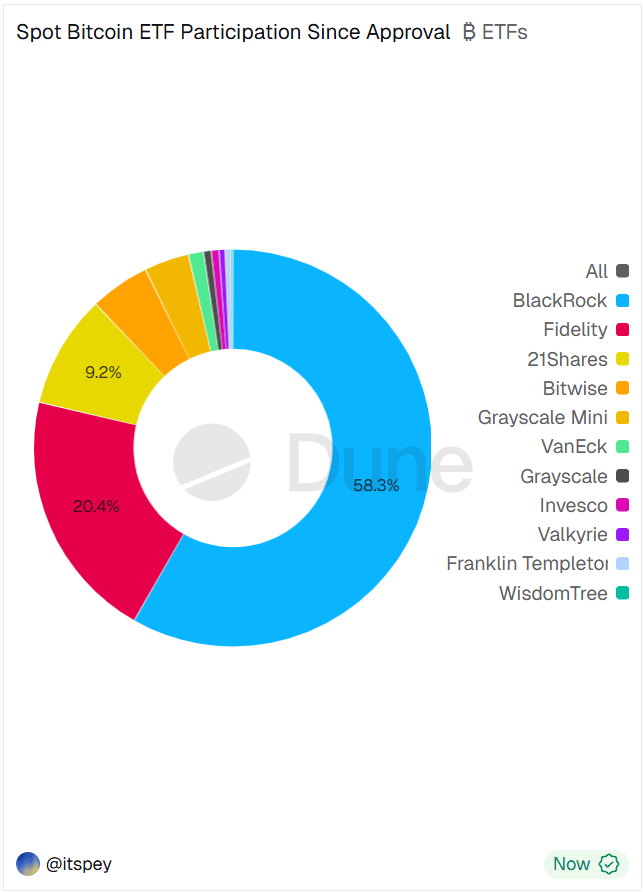
Our researchers designed this metric with ❤️
GLOSSARY CORNER A crypto bubble is a market phenomenon where cryptocurrency prices are driven far above their intrinsic value by speculation and hype, only to eventually crash sharply when investor sentiment shifts and the market corrects itself. | EDITOR’S CHOICE |
Stay Informed, Stay Ahead! Subscribe to Blockchain Insights Today!
Don’t miss out on the latest developments in blockchain and crypto-economics. Join our community of enthusiasts, investors and researchers by subscribing now.
Explore the future with us!